Assortment Planning
We map slime kits, squishy refills, and fidget packs into good-better-best groups, then match each group to age guidance and likely purchase occasions such as birthdays, classroom rewards, and quiet travel play.
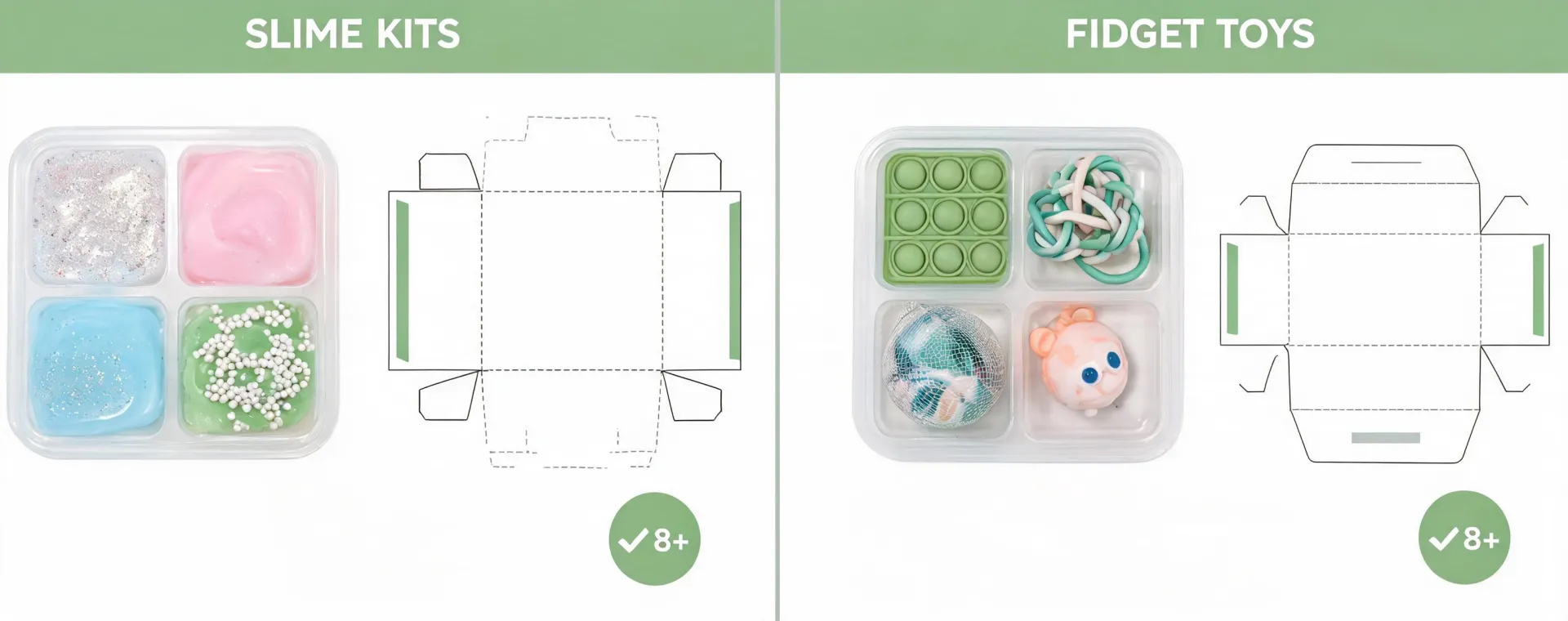
Our service model is deliberately practical: define the product mix, check safety language, prepare packaging, and keep replenishment simple after launch.
Elmers supports buyers who need a tidy sensory line, not a maze of formula choices. The work starts with the play moment and ends with a shelf plan that staff can understand quickly.
We map slime kits, squishy refills, and fidget packs into good-better-best groups, then match each group to age guidance and likely purchase occasions such as birthdays, classroom rewards, and quiet travel play.
Labels and product pages are checked for plain warnings, storage notes, and non-toxic positioning so shoppers do not need to decode technical wording before choosing a kit.
Packaging hierarchy, carton grouping, sample requests, and refill rhythm are organized into a short buying file that can move from merchandising to customer support without translation.
The process is built for lean teams. Each handoff produces one usable artifact rather than a long presentation: a category map, a sample decision sheet, a packaging note, and a reorder guide.
We separate messy creative slime, quiet tactile fidgeting, soft squeeze play, and giftable activity kits so every product earns its shelf space.
Core colors, activator format, add-ins, and accessory count are narrowed into a concise sample set that avoids duplicate choices.
Age cues, care guidance, safety notes, and refill suggestions are written in scan-friendly copy for packaging, product pages, and support teams.
We document which kits should remain evergreen, which colors can rotate seasonally, and which accessories should be held as low-risk add-ons.
Elmers can help shape a lean sensory play assortment for specialty retail, school stores, museum shops, and online bundles.